Iran's 2026 Political Crisis: Succession Race & Global Tensions
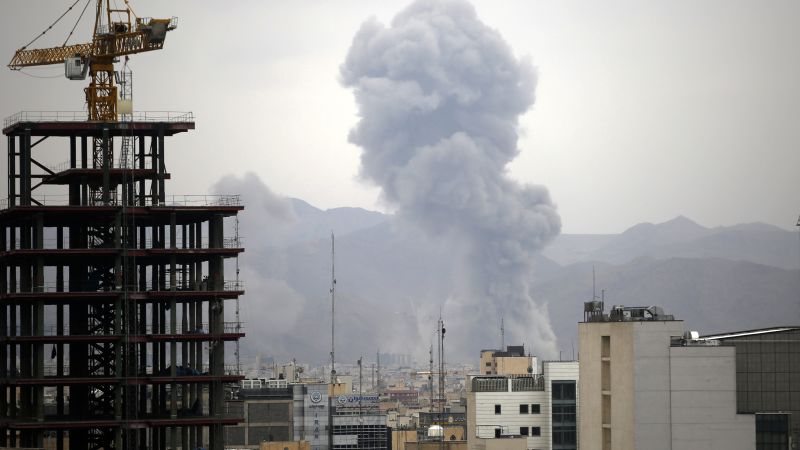
The year 2026 has dawned upon West Asia with unprecedented turmoil, casting a long shadow over the future of Iran. On February 28, the Islamic Republic was plunged into a severe political crisis following the assassination of its long-serving Supreme Leader, Ayatollah Ali Khamenei. Coordinated military strikes by the United States and Israel delivered a seismic shock, not only to Tehran but to the entire geopolitical landscape. This audacious act has ignited a volatile succession race within Iran and dramatically escalated regional and global tensions, reshaping the dynamics of power in a strategic corner of the world.
As the nation of over 85 million people grapples with the sudden void at its helm, the world watches with bated breath. Iran, known historically as Persia, is a theocratic republic whose unique system of Velayat-e Faqih grants ultimate authority to the Supreme Leader. Khamenei's death leaves a vacuum at the very apex of this system, triggering a frantic, high-stakes power struggle among powerful clerical factions and the influential Islamic Revolutionary Guard Corps (IRGC). The fallout extends far beyond Iran's borders, impacting everything from global energy markets to the delicate balance of power across the Middle East.
The Shadow of 2026: A Nation in Turmoil
The assassination of Supreme Leader Ayatollah Ali Khamenei on February 28, 2026, marks an undeniable turning point for Iran. The precision and coordination of the US and Israeli strikes underscore a dramatic escalation in long-simmering hostilities, directly targeting the symbol of Iran's theocratic authority. This act immediately triggered a cascade of internal instability, throwing the established succession protocols into disarray and exposing deep fissures within the state apparatus.
Geographically, Iran's position is inherently strategic. Spanning 1,648,195 square kilometers with its capital, Tehran, serving as the largest city, it shares borders with Afghanistan, Armenia, Azerbaijan, Iraq, Pakistan, Turkey, and Turkmenistan. Crucially, its extensive coastlines along the Persian Gulf, Gulf of Oman, and Caspian Sea grant it immense leverage over vital global shipping lanes, particularly the Strait of Hormuz. This inherent strategic value makes any internal upheaval in Iran a matter of global concern, as the repercussions are felt far beyond its rugged mountains and vast deserts. The 1979 revolution established the current theocratic republic, where the Supreme Leader holds sway over all major state institutions and policies. The abrupt removal of this central figure has thus created an existential challenge to the very foundation of the Islamic Republic.
The High-Stakes Succession Race: Who Will Lead Iran?
With Ayatollah Khamenei gone, the critical task of choosing his successor falls to the Assembly of Experts, a body of 88 powerful clerics. However, this process is rarely straightforward, especially under the shadow of foreign aggression and internal unrest. The succession race is expected to be a brutal contest between various factions, each vying for control over Iran's immense political, military, and economic apparatus. Potential contenders could emerge from several powerful groups:
- Hardline Clerics: Often members of the Assembly of Experts or the Guardian Council, these figures represent the bedrock of the Velayat-e Faqih system. They would likely advocate for continuity in revolutionary principles and a strong stance against Western influence.
- Islamic Revolutionary Guard Corps (IRGC) Figures: While not typically a direct path to Supreme Leadership, the IRGC's immense power, wealth, and influence mean they will play a decisive role in endorsing, or even effectively choosing, the next leader. A figure with strong ties to the IRGC could emerge, representing a more militarized and security-focused direction for the country.
- Judiciary Chief or Current President: These roles often serve as proving grounds for future leadership, though their prospects now hinge on their ability to navigate the intense internal power struggle and project strength during a crisis.
The outcome of this succession battle will have profound implications for Iran's domestic policy, including human rights, economic management, and social freedoms. Externally, it will determine the nation's posture towards the West, its regional adversaries, and its nuclear ambitions. A hardline successor might double down on anti-Western rhetoric and escalate regional proxy conflicts, while a more pragmatic (though unlikely in the current climate) leader might seek to de-escalate. The stability of the theocratic republic hangs precariously in the balance, as highlighted in Theocratic Republic in Turmoil: Iran's Future Post-Khamenei Assassination, where the deep-seated challenges facing the nation are further explored.
Escalating Global Tensions: A Wider Conflict?
The assassination of Khamenei did not occur in isolation; it ignited an already simmering conflict. Reports from early March 2026 confirmed that the war with Iran had expanded into its third week, with Israel launching new waves of strikes across Iran and Lebanon. This points to a pre-existing conflict that dramatically intensified following the leadership decapitation. The immediate aftermath saw President Donald Trump calling on other nations to join the US in deploying warships to the Strait of Hormuz, a move directly aimed at safeguarding global energy supplies amidst a deepening energy crisis.
The Strait of Hormuz, a choke point through which a significant portion of the world's oil transits, has become a focal point of the crisis. Surging oil prices reflect the market's anxiety, with Energy Secretary Chris Wright acknowledging a "short-term disruption" but offering no guarantees of a swift price drop. "There's no guarantees in wars at all," he cautioned, perfectly encapsulating the global uncertainty. In response to the escalating hostilities, the U.S. military ordered the deployment of thousands of Marines to the Middle East, signaling a significant commitment to projecting force and protecting American interests. Concurrently, the U.S. government issued stark warnings for Americans to leave Iraq, and non-emergency government employees were evacuated, indicating a rapid deterioration of regional security and the potential for a broader conflict engulfing key allied states. This complex interplay of regional and global actors, intensified by the historical significance of Iran, is elaborated in From Persia's Noble Roots: Iran's Strategic Role Amidst Conflict.
Navigating the Crisis: Key Considerations and Outlook
As Iran navigates its most profound political crisis in decades, several critical factors will shape the immediate and long-term future:
- Internal Cohesion: The ability of the remaining leadership and the IRGC to maintain a unified front will be crucial. Disunity could lead to civil strife or a fracturing of power centers.
- International Response: The actions of global powers, particularly the US, EU, China, and Russia, will heavily influence the conflict's trajectory. Will there be concerted efforts for de-escalation, or will foreign interference exacerbate the situation?
- Energy Market Volatility: The Strait of Hormuz remains a flashpoint. Any prolonged disruption to oil transit could cripple global economies, making energy security a top priority for most nations. Businesses and governments must monitor market indicators closely and prepare for sustained volatility.
- Regional Proxy Warfare: Iran's network of regional proxies will likely be activated, potentially expanding the conflict into Lebanon, Syria, Yemen, and Iraq, creating a wider humanitarian crisis.
The coming weeks and months will be pivotal. Analysts suggest potential scenarios ranging from a swift, but potentially violent, consolidation of power by a new hardline leader, to prolonged internal instability, or even an unprecedented degree of international intervention. For those observing, understanding the complex interplay between internal power struggles, the strategic significance of the region, and the global economic impact is paramount.
Conclusion
The assassination of Ayatollah Ali Khamenei in February 2026 has irrevocably altered Iran's trajectory, propelling it into a state of profound political crisis. The ongoing succession race, coupled with an escalating regional war and heightened global tensions, underscores the immense uncertainty facing one of West Asia's most pivotal nations. As the world watches to see who will emerge to lead the Islamic Republic and how the international community will respond, one thing is clear: Iran's future, and indeed the stability of the entire Middle East, hangs precariously in the balance, promising a period of unprecedented challenge and transformation.