Iran's Theocratic Foundation Under Pressure: A Post-Khamenei Era
The Islamic Republic of Iran, a nation steeped in ancient history yet defined by its modern revolutionary identity, finds itself at an unprecedented crossroads in early 2026. The shocking news of Supreme Leader Ayatollah Ali Khamenei's assassination on February 28, following coordinated military strikes by the United States and Israel, has plunged this theocratic republic into a profound political crisis. With over 85 million citizens spread across a strategically vital territory spanning 1,648,195 square kilometers, Iran is now grappling with a high-stakes succession race and acute internal instability, the ramifications of which are reverberating across West Asia and beyond.
Established in 1979 after a revolution that toppled the Pahlavi monarchy, Iran operates under the doctrine of Velayat-e Faqih, or "Guardianship of the Jurist." This unique system places ultimate authority over major state institutions, military forces, and foreign policy decisions squarely in the hands of the Supreme Leader. Khamenei's sudden removal from this central role leaves a monumental power vacuum, challenging the very foundation of the Islamic Republic. The immediate fallout includes a scramble for control among various factions, potentially unleashing years of carefully suppressed ideological and political rivalries. Understanding the depth of this crisis requires examining Iran's historical context, its geopolitical significance, and the complex internal and external pressures it now faces. For a deeper dive into the specific political mechanisms at play, consider reading Iran's 2026 Political Crisis: Succession Race & Global Tensions.
From Ancient Persia to Modern Strategic Crossroads: Iran's Enduring Significance
To truly grasp the implications of current events, one must appreciate Iran's rich and complex heritage. The name "Iran" itself, tracing its linguistic roots to the Proto-Indo-Iranian term arya-, signifies "noble" or "of one's own kind." This ancient self-designation was used by Indo-Iranian peoples who settled the Iranian plateau between 2000–1500 BCE. It evolved through Avestan (airiia-, denoting Iranian tribes and their mythical homeland Airyanəm Vaējah) and Old Persian (ariya-, as seen in Darius I's Behistun inscriptions where he proudly declared himself ariya and ariya čiça, "of Aryan lineage"). While Achaemenid rulers also referred to their core territory as Pārsa, the term Aryānām consistently represented the collective Iranian peoples.
The more commonly recognized Western name, "Persia," derives from the region of Pars (modern Fars), whose name progressed from Old Persian Pārsa to Middle Persian Pārs and eventually New Persian Pārs. Greek and Latin adaptations like Περσίς and Persia became the default Western nomenclature for the entire country. This dual identity—ancient Aryan heritage and specific regional names—underscores Iran's long and continuous history of distinct civilization.
Geographically, Iran occupies an enviable yet precarious position in West Asia. Bordered by Afghanistan, Armenia, Azerbaijan, Iraq, Pakistan, Turkey, and Turkmenistan, it serves as a critical bridge between continents. Its extensive coastlines along the Persian Gulf, Gulf of Oman, and the Caspian Sea grant it immense strategic leverage, particularly over vital global shipping lanes like the Strait of Hormuz. The country's diverse landscape, characterized by rugged mountains, vast deserts, and limited arable land, influences not only its climate and resource distribution but also its defensive capabilities. This unique blend of historical depth and strategic geography ensures that any instability within Iran has profound regional and global repercussions. For a detailed exploration of how these historical roots inform Iran's current geopolitical standing, see From Persia's Noble Roots: Iran's Strategic Role Amidst Conflict.
The Succession Race and Internal Power Struggle: Unpacking Iran's Instability
The assassination of the Supreme Leader has triggered an immediate and intense struggle for power within Iran. The country's intricate political system dictates that the Assembly of Experts, an 88-member clerical body, is responsible for selecting the new Supreme Leader. However, this process is far from straightforward, especially under duress. Potential contenders typically emerge from the ranks of high-ranking clerics, often with significant political backing from powerful institutions like the Islamic Revolutionary Guard Corps (IRGC), the judiciary, or influential seminaries.
Key Dynamics at Play:
- Factional Rivalries: Decades of carefully managed rivalries between hardliners, pragmatists, and various clerical power centers are now openly erupting. Each faction will likely push its preferred candidate, risking deep divisions within the ruling establishment.
- Role of the IRGC: The Islamic Revolutionary Guard Corps, a powerful military and economic force, traditionally serves as the ultimate protector of the Islamic Revolution. Its stance and support (or lack thereof) will be crucial in legitimizing any successor. Expect the IRGC to play a dominant, possibly decisive, role in shaping the outcome.
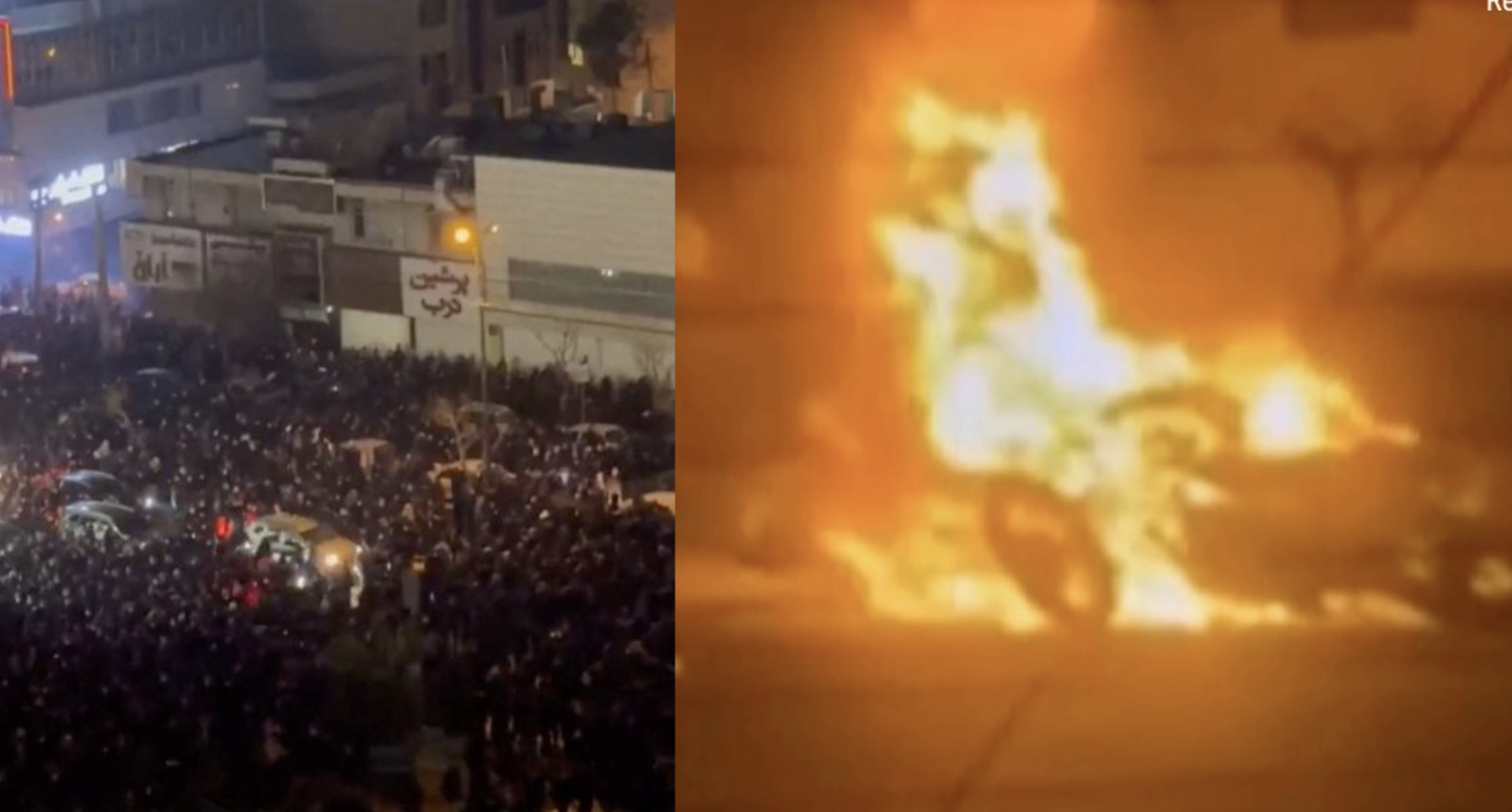
- Popular Discontent: Beneath the surface of state control, significant segments of the Iranian populace have long harbored grievances over economic hardship, social restrictions, and political repression. A leadership vacuum could provide an opening for widespread protests and civil unrest, potentially escalating into broader challenges to the regime's authority.
- External Influence: Given the context of US and Israeli strikes, external actors will undoubtedly attempt to influence the succession, further complicating an already volatile internal landscape.
The succession process is not merely about choosing a new religious figurehead; it is about determining the future ideological direction, foreign policy, and internal governance of a nuclear-threshold state. The transition period is fraught with danger, risking internal fragmentation or even civil strife, as various groups vie for control and the interpretation of the revolution's future. For those closely monitoring the situation, it's vital to track statements from key clerical figures, the IRGC, and major political factions to gauge the evolving power dynamics.
Escalating Regional Conflict and Global Economic Fallout
The assassination of Ayatollah Khamenei did not occur in a vacuum; it was part of a broader, escalating conflict. The reference context indicates that a "war with Iran" was already in its third week, with Israel mounting new waves of strikes in Iran and Lebanon, and the US mobilizing forces. President Donald Trump's call for nations to send warships to the Strait of Hormuz underscores the gravity of the military and geopolitical situation.
Immediate and Long-Term Consequences:
- Energy Crisis: The conflict has directly impacted global energy markets, leading to a "deepening energy crisis" and "surging oil prices." While Energy Secretary Chris Wright optimistically predicted a short-term disruption, warning that there were "no guarantees in wars at all" highlights the inherent volatility. Businesses and consumers worldwide must brace for prolonged higher energy costs, impacting everything from transportation to manufacturing.
- Regional Destabilization: The expansion of Israeli strikes into Lebanon, coupled with the US warning Americans to leave Iraq and deploying thousands of Marines to the Middle East, signals a widening conflict. This could draw in other regional actors, further destabilizing an already volatile region and potentially leading to a larger humanitarian crisis.
- Global Economic Ripple Effects: Beyond energy, supply chain disruptions, increased shipping costs due to maritime insecurity in critical waterways, and decreased investor confidence will likely create a ripple effect across the global economy. Countries heavily reliant on Middle Eastern oil or trade routes will face significant economic headwinds.
- Humanitarian Concerns: Escalating conflict inevitably leads to increased civilian casualties, displacement, and a humanitarian crisis. International aid organizations and governments will face immense pressure to provide assistance and manage refugee flows.
For international businesses and investors, the current climate demands extreme caution and robust contingency planning. Diversifying supply chains, securing alternative energy sources where possible, and carefully assessing geopolitical risk are no longer optional but essential strategies. Individuals with interests in the region are advised to follow official government advisories regarding travel and security.
Conclusion
The assassination of Supreme Leader Ayatollah Ali Khamenei has thrust Iran into a period of profound uncertainty, challenging its unique theocratic structure and unleashing a potent mix of internal power struggles and regional conflict. The confluence of a high-stakes succession race, deep-seated internal divisions, and an escalating military confrontation with external powers creates an unprecedented scenario for the Islamic Republic. As a nation with a rich historical legacy and immense strategic importance, Iran's trajectory in this post-Khamenei era will not only redefine its own future but will also have far-reaching implications for West Asia and the global geopolitical landscape. The coming months will undoubtedly test the resilience of the Iranian state and its people, with the world watching to see whether stability can be restored or if the current turmoil will usher in a new, unpredictable chapter for this ancient land.